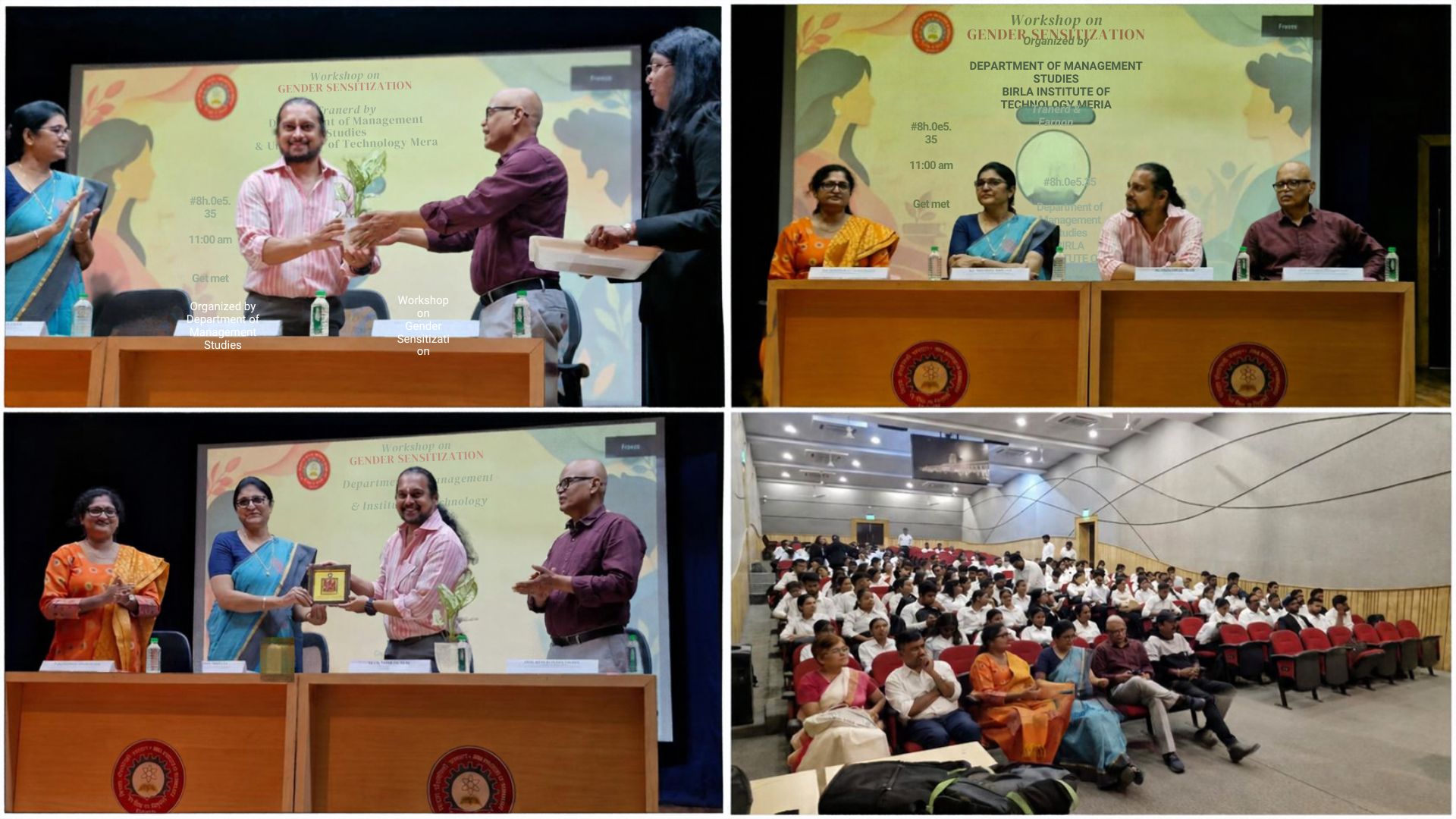
Ranchi, October 6, 2026: The Department of Management Studies at Birla Institute of Technology, Mesra, organized an impactful workshop on “Gender Sensitization” at the CAT Hall on October 6, 2026. The workshop, which began at 11:00 AM, brought together students, researchers and faculty members with the objective of creating greater awareness about gender equality, respectful communication, institutional responsibility and an inclusive academic environment. Through interactive discussions and practical examples, the programme encouraged participants to look beyond conventional gender stereotypes and understand the importance of equality and empathy in both academic and professional spaces.
A Workshop Focused on Building an Inclusive Campus
The Gender Sensitization workshop was conceived as an initiative to promote an environment where every individual can participate, communicate and grow without facing discrimination based on gender. At a time when educational institutions are increasingly focusing on diversity, equity and inclusion, such programmes have an important role in creating awareness among young people before they enter professional workplaces. The workshop at BIT Mesra attempted to connect classroom learning with real-life social and organizational situations, helping participants understand how everyday attitudes and behaviour can influence the larger institutional environment.
Leadership and Guidance from the Department of Management Studies
The workshop was conducted under the leadership of Dr. Kumar Sanjay Sawarni, Head of the Department of Management Studies, who served as the Chairman of the programme. His leadership provided an academic and managerial perspective to the initiative, particularly because issues related to gender equality and workplace behaviour are increasingly becoming important areas of organizational management. The programme brought together members of the academic community and created a platform where questions related to gender, communication, workplace behaviour and institutional responsibility could be discussed openly.
Dr. Shraddha Shivani Joined as Chief Guest
The event was graced by Dr. Shraddha Shivani as the Chief Guest, whose presence added significance to the programme. Gender sensitization in an academic environment is not merely about discussing discrimination; it also involves developing an understanding of dignity, mutual respect and equal participation. The presence of senior academic members at such programmes helps reinforce the message that gender equality is an institutional responsibility rather than an issue that concerns only a particular section of society.
Dr. Sujata Priyambada Dash Coordinated the Programme
The workshop was coordinated by Dr. Sujata Priyambada Dash, Assistant Professor in the Department of Management Studies. The coordinator played an important role in facilitating the sessions and ensuring that the discussions remained connected to practical academic and professional situations. The programme concluded with a formal vote of thanks delivered by Dr. Dash, bringing the workshop to a meaningful close after an interactive question-and-answer session.
Shyam Kumar Led the Technical Sessions
The primary technical sessions were delivered by Mr. Shyam Kumar, Co-founder and Director of DEVNET NGO, Ranchi, who served as the Resource Person. With experience in community advocacy and social intervention, Mr. Kumar brought a practical perspective to the discussion. Rather than limiting gender sensitization to theoretical definitions, the session examined how gender-related attitudes can influence communication, decision-making, professional relationships and institutional culture.
Understanding the Difference Between Gender and Biological Sex
One of the important areas discussed during the workshop was the distinction between biological sex and gender. Biological sex generally refers to biological characteristics, while gender encompasses social roles, expectations, behaviours and identities that societies and cultures may associate with people. Understanding this distinction is important because many stereotypes are created through social conditioning rather than biological necessity. The discussion encouraged participants to examine how assumptions about what men and women “should” do can influence educational choices, career opportunities and interpersonal relationships.
Unconscious Bias Can Influence Everyday Decisions
Another significant theme of the workshop was unconscious bias. People may sometimes carry assumptions about others without consciously intending to discriminate. Such biases can influence classroom interactions, recruitment decisions, leadership opportunities, performance assessments and everyday communication. The workshop encouraged participants to recognize that equality does not simply mean treating everyone identically; it also requires becoming aware of hidden assumptions that may create unequal opportunities.
Microaggressions and the Impact of Everyday Communication
The discussion also addressed microaggressions, referring to subtle comments, behaviours or interactions that can communicate stereotypes or make another person feel excluded or uncomfortable. Such behaviour may sometimes appear insignificant to the person making the remark but can have a cumulative psychological impact on the person receiving it. By recognizing these subtle forms of bias, students and professionals can become more conscious of their language and behaviour and contribute to a more respectful environment.
Awareness of the PoSH Act and Institutional Protection
The workshop also highlighted the legal framework surrounding workplace safety, particularly the Prevention of Sexual Harassment of Women at Workplace Act, 2013, commonly known as the PoSH Act. Participants were introduced to the importance of understanding legal safeguards and institutional mechanisms available for addressing complaints of sexual harassment. The discussion emphasized that awareness of workplace laws is essential for students as they prepare to enter organizations where professional conduct and institutional accountability are critical.
Importance of the Internal Complaints Committee
The role of the Internal Complaints Committee, commonly known as the ICC, was another important component of the session. Institutional mechanisms such as the ICC are intended to provide a formal framework for addressing complaints covered under applicable workplace sexual-harassment law. Understanding how such mechanisms work can help students and employees recognize their rights, responsibilities and available avenues for seeking institutional support. The session therefore connected legal awareness with the broader objective of creating safe and respectful workplaces.
Diversity, Equity and Inclusion in Professional Life
The workshop also explored the broader concept of Diversity, Equity and Inclusion, widely referred to as DEI. Participants discussed why equal opportunity should extend beyond recruitment and include career advancement, leadership opportunities, professional development and organizational decision-making. A workplace may have diverse employees but still face inequality if certain groups systematically receive fewer opportunities to progress. The session therefore encouraged participants to think about equality not only in terms of representation but also in terms of genuine participation and advancement.
Breaking the Glass Ceiling
The concept of the glass ceiling was also discussed in the context of gender inequality. The term refers to invisible structural or organizational barriers that can prevent qualified individuals, particularly women, from reaching senior leadership positions despite having the necessary skills and experience. Addressing such barriers requires organizations to examine their recruitment practices, promotion systems, workplace culture and leadership structures. For management students, understanding these issues is particularly relevant because many of them will eventually become decision-makers within organizations.
Inclusive Language Can Change Workplace Culture
The workshop emphasized the importance of gender-neutral and inclusive language in academic and professional communication. Language influences how people perceive themselves and others, and careless or stereotypical expressions can unintentionally reinforce discrimination. Encouraging respectful vocabulary in classrooms, offices, written communication and institutional documents can contribute to a more welcoming environment. Participants were encouraged to think carefully about the words they use and understand how communication can either strengthen inclusion or reinforce stereotypes.
Bystander Intervention and the Role of Allies
An important practical aspect of the workshop was the discussion around bystander intervention and allyship. Gender sensitization is not limited to the people directly affected by discriminatory behaviour. Individuals who witness inappropriate comments, harassment or exclusion can also play an important role by responding safely, supporting the affected person or reporting serious concerns through appropriate institutional channels. The session encouraged participants to understand that creating a respectful environment is a shared responsibility.
Gender Stereotypes and Mental Health
The workshop also connected gender stereotypes with mental health and emotional well-being. Social expectations can affect people across genders by creating pressure to behave according to rigid ideas of masculinity or femininity. Expectations about emotional expression, professional success, family responsibilities and social behaviour can sometimes create psychological stress. Gender sensitization can therefore contribute not only to equality but also to a healthier environment where individuals feel comfortable expressing themselves and seeking support when required.
Interactive Discussions Made the Workshop Practical
Rather than remaining a purely lecture-based programme, the workshop included interactive discussions in which participants were encouraged to examine real-life situations. This approach helped connect theoretical concepts such as gender bias, equality and workplace safety with practical situations that students may encounter in educational institutions or future workplaces. The interactive format also gave participants an opportunity to ask questions and examine different perspectives.
Managerial Case Studies Added a Practical Dimension
The workshop concluded with a dynamic question-and-answer session, during which participants examined managerial case studies and discussed possible responses to situations involving gender dynamics and institutional behaviour. Case-based learning is particularly useful for management students because it requires them to move beyond theoretical understanding and consider how managers should respond when faced with complex workplace situations. The discussions provided an opportunity to explore questions of fairness, accountability, communication and professional ethics.
A Step Towards a More Respectful Academic Culture
The Gender Sensitization workshop at BIT Mesra highlighted the fact that building an inclusive institution requires continuous awareness and participation. Gender equality is not achieved simply through policies or legal provisions; it also depends on everyday behaviour, communication and institutional culture. Workshops such as this can help students and faculty members understand their individual responsibilities and encourage them to contribute to a more respectful and equitable environment.
BIT Mesra Connects Management Education with Social Responsibility
For students of management, understanding gender sensitization is particularly significant because future managers will influence organizational culture, recruitment, performance evaluation, team management and workplace policies. The workshop therefore connected management education with a broader responsibility towards society. By discussing equality, inclusion, legal safeguards and ethical leadership, the programme encouraged students to view management not merely as a business function but also as a responsibility towards people and institutions.
Workshop Ends with a Message of Equality and Empathy
The Gender Sensitization workshop organized by the Department of Management Studies at BIT Mesra concluded with a strong emphasis on equality, empathy, dignity and institutional responsibility. The programme provided participants with an opportunity to understand gender-related issues from social, legal, managerial and psychological perspectives. With students, researchers and faculty members coming together for the discussion, the workshop served as an important step towards strengthening awareness and promoting a more inclusive academic and professional culture.