
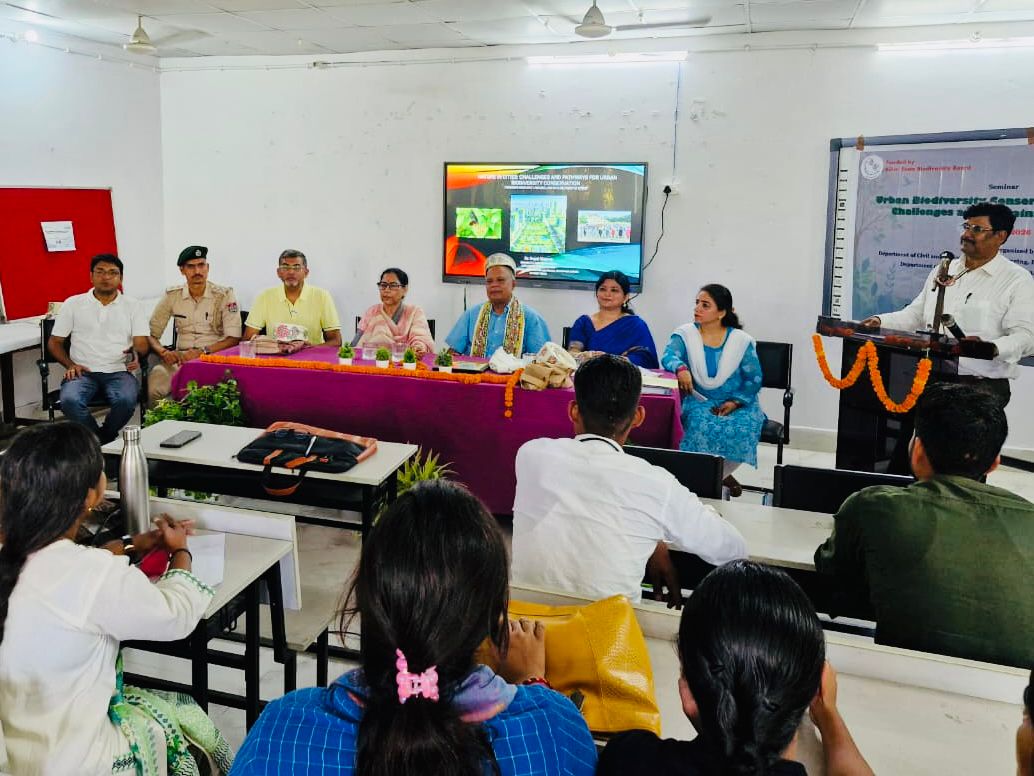
Biodiversity remains one of the most essential foundations of life on Earth. It supports ecosystems, ensures food security, maintains ecological balance, and directly influences human well-being. In an era marked by climate change, environmental degradation, and habitat loss, institutions around the world are increasingly emphasizing biodiversity conservation and scientific research. Recognizing this global importance, Birla Institute of Technology (BIT) Mesra, Ranchi organized a seminar on the occasion of the International Day for Biodiversity 2026 in collaboration with Dr. Bhim Rao Ambedkar Bihar University (BRABU), Muzaffarpur, on May 18, 2026.
The event was not merely an academic gathering but a meaningful initiative to create awareness about biodiversity conservation and its role in sustainable development. The seminar brought together researchers, educators, and environmental scholars to discuss ecological challenges and explore scientific solutions that can contribute to community welfare and environmental sustainability.
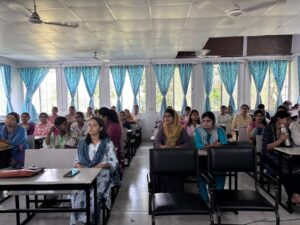
International Day for Biodiversity and Its Global Relevance
The International Day for Biological Diversity is observed annually to increase awareness and understanding of biodiversity-related issues. Across the world, governments, researchers, and institutions use this occasion to encourage conversations about environmental conservation and the need to preserve natural ecosystems.
Biodiversity is not limited to forests and wildlife; it includes microorganisms, plants, aquatic ecosystems, soil organisms, and genetic diversity. The loss of biodiversity directly impacts agriculture, health systems, water resources, and climate resilience. Scientific communities increasingly emphasize that biodiversity protection is no longer an environmental concern alone—it has become a developmental and societal necessity.
The seminar organized by BIT Mesra and BRABU reflected this broader global perspective by focusing on the relationship between biodiversity, sustainable development, and local communities.
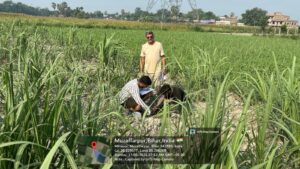
BIT Mesra Researchers Conducting Field-Based Biodiversity Studies
As part of an ongoing research initiative funded by the Bihar Biodiversity Board, researchers from BIT Mesra have been conducting detailed studies in Muzaffarpur and surrounding regions. Dr. Sukalyan Chakraborty and Dr. Kirti Avishek from BIT Mesra visited Muzaffarpur to investigate the biodiversity characteristics of the region and collect valuable ecological data.
Field-based biodiversity research remains one of the most important scientific approaches for understanding environmental patterns. Direct interaction with ecosystems allows researchers to identify ecological changes, species distribution, environmental stress factors, and emerging conservation concerns.
The project also includes Dr. Tanushree Bhattacharya from BIT Mesra as a Co-Investigator, highlighting the interdisciplinary nature of modern biodiversity research. Collaborative scientific studies involving experts from multiple fields often produce more comprehensive and reliable outcomes.
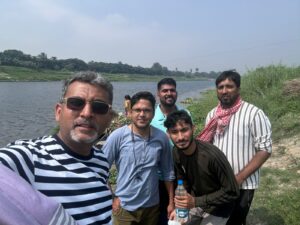
Importance of Water and Soil Sample Collection in Biodiversity Research
During the survey, several water and soil samples were collected from different locations across the Muzaffarpur region. While this activity may appear routine, sample collection is a fundamental component of ecological research and biodiversity assessment.
Water and soil are living systems containing complex communities of microorganisms and environmental indicators. Researchers analyze these samples to study microbial diversity, nutrient composition, pollution levels, and ecological health. Such investigations help scientists understand the quality and resilience of ecosystems.
Changes in soil microorganisms or water biodiversity can often provide early signs of environmental degradation. These indicators can support conservation policies and guide local authorities in sustainable land-use and environmental planning.
Scientific biodiversity studies based on field sampling also contribute valuable baseline data that can be used for future environmental monitoring.
Biodiversity and Sustainable Development: Understanding the Connection
One of the key themes of the seminar was the role of biodiversity in sustainable development. Sustainable development aims to meet present needs without compromising the ability of future generations to meet their own requirements.
Healthy ecosystems provide essential services including clean air, fertile soil, water purification, pollination, climate regulation, and food resources. Communities, particularly those dependent on agriculture and natural resources, rely heavily on biodiversity for livelihoods and economic stability.
Experts increasingly recognize that biodiversity conservation and economic development are not opposing concepts. Instead, sustainable management of ecosystems can create long-term social and economic benefits.
Seminars like this help bridge the gap between scientific understanding and practical implementation by encouraging discussions among researchers, educators, and local stakeholders.
Community Livelihood and Ecological Awareness
Another important aspect highlighted during the seminar was the connection between biodiversity and community livelihood. Rural and semi-urban populations often depend directly on local ecosystems for agriculture, fisheries, medicinal resources, and traditional occupations.
Environmental degradation can affect local economies and increase social vulnerabilities. Therefore, biodiversity conservation should involve community participation and awareness-building efforts.
Academic institutions play an important role in this process. Universities and research organizations not only generate scientific knowledge but also help communicate environmental awareness to society.
By engaging with regional biodiversity issues, institutions like BIT Mesra are contributing beyond classroom education and creating meaningful social impact.
Role of Academic Institutions in Environmental Research
Modern environmental challenges require collaborative research involving universities, scientific organizations, and government agencies. Academic institutions increasingly act as centers of innovation where ecological problems are studied scientifically and sustainable solutions are developed.
Partnerships such as the one between BIT Mesra and BRABU demonstrate how collaborative initiatives can strengthen research capacity and improve regional environmental understanding.
Students and young researchers also benefit significantly from such initiatives. Participation in biodiversity projects exposes them to field research methodologies, ecological assessment techniques, and interdisciplinary learning experiences.
Such exposure can inspire future scientists and environmental leaders who will contribute to conservation efforts.
Future Significance of Regional Biodiversity Studies in Bihar
Bihar possesses diverse ecological landscapes including wetlands, agricultural systems, river ecosystems, and unique biodiversity zones. Despite its ecological importance, many regional ecosystems remain scientifically underexplored.
Research projects focusing on local biodiversity can generate valuable information that supports conservation planning and environmental policymaking. Detailed biodiversity mapping can also help identify threatened habitats and species requiring protection.
As climate change and urbanization continue to alter natural systems, regional ecological research becomes increasingly important. Scientific studies conducted today may play a crucial role in shaping tomorrow’s conservation strategies.
Conclusion
The seminar organized by Birla Institute of Technology Mesra and Dr. Bhim Rao Ambedkar Bihar University on the occasion of International Day for Biodiversity 2026 represented more than a ceremonial event. It reflected a broader commitment toward environmental research, sustainable development, and biodiversity conservation.
Through field investigations, academic collaboration, and scientific dialogue, the initiative highlighted the importance of preserving ecological diversity while supporting community welfare. As environmental challenges continue to grow globally, such collaborative research efforts serve as essential steps toward building a more sustainable and ecologically responsible future.