
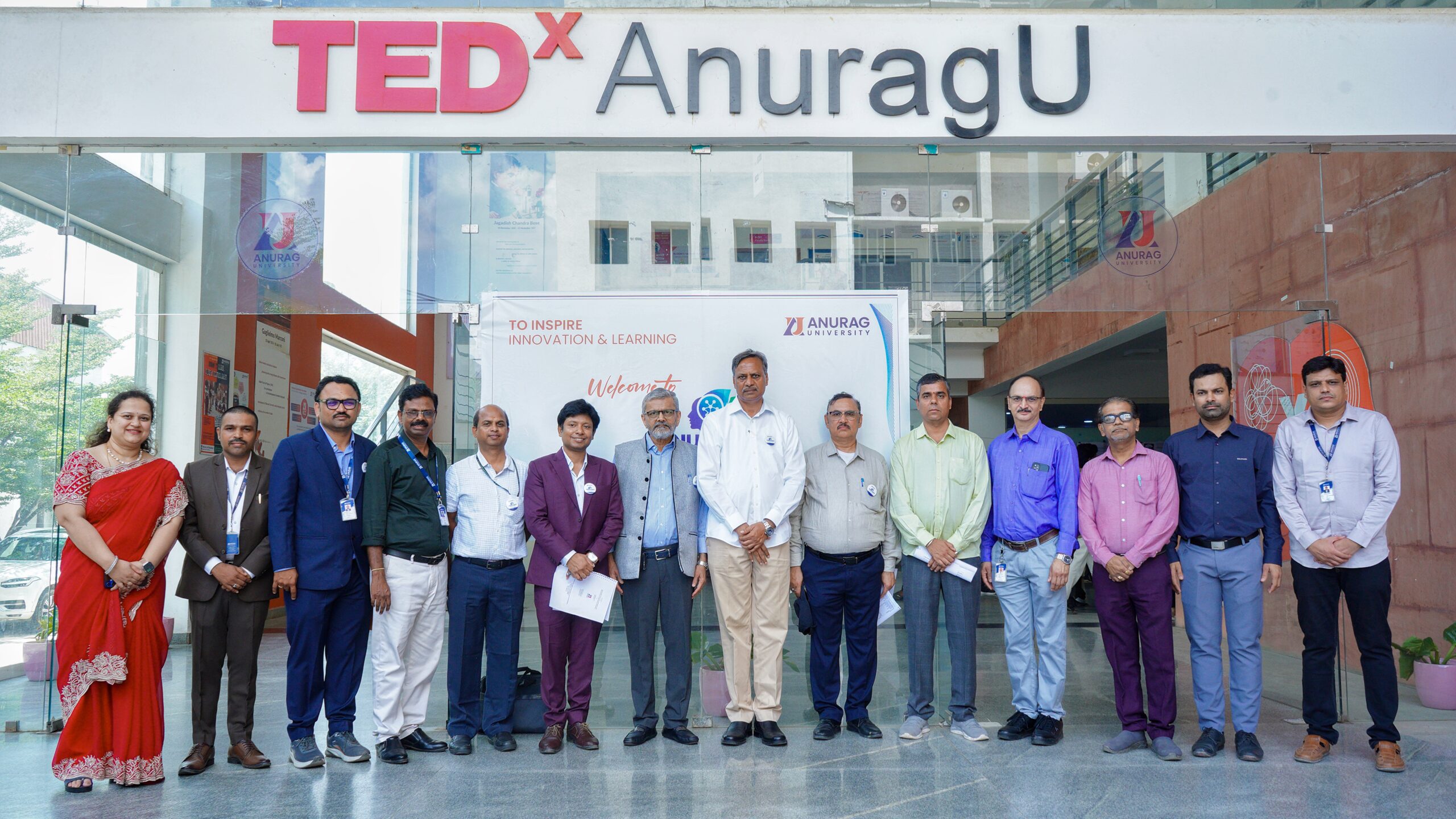
Hyderabad, September 20, 2026: Anurag University hosted ANUDHABAN 2026, a global research summit held under the theme “Where Research Meets Global Vision.” The summit brought together eminent academicians, scientists, industry leaders and researchers from India, USA, UK, Egypt, Jordan and UAE to explore how research, innovation and interdisciplinary collaboration can be translated into meaningful societal impact. The event was held at Anurag University on September 19 and focused on creating stronger connections between academic research, industry, technology and real-world solutions.
A Research Platform Designed for Global Collaboration
ANUDHABAN was conceived as a platform where researchers from different disciplines and countries could come together to exchange ideas, discuss emerging areas of research and explore opportunities for collaboration. The summit placed particular emphasis on connecting global research expertise with interdisciplinary research, real-world innovation and pathways through which research can create a wider societal impact.
The initiative was conceptualised and strategically led by Prof. (Dr.) Debajyoty Banik, Founding Chair, ANUDHABAN and Director, Anurag University. The vision behind the summit was to strengthen a research environment in which academic ideas could move beyond conventional boundaries and develop into collaborative projects, technological solutions and innovations with practical applications. “ANUDHABAN 2026”
Cultural Programme Marks the Beginning of the Summit
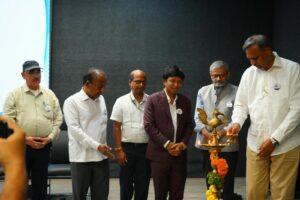
The summit commenced with a cultural programme, setting the tone for a day focused on research, innovation and academic interaction. This was followed by the ceremonial lighting of the lamp by the distinguished guests on the stage, formally inaugurating ANUDHABAN 2026.
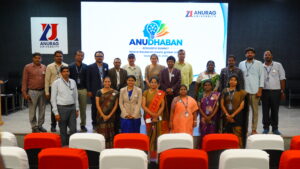
A large gathering of students, researchers, faculty members, academicians and other participants attended the event. The presence of young researchers alongside experienced academic and industry leaders created an opportunity for knowledge exchange between different generations of the research community. “ANUDHABAN 2026”
Prof. Debajyoty Banik Highlights the Importance of Research
In his visionary welcome address, Prof. (Dr.) Debajyoty Banik underlined the importance of creating platforms that can inspire students and researchers to engage more deeply with research. He highlighted the need for universities to create an environment where research is encouraged, discussed and connected with contemporary challenges.
The summit, according to the vision behind ANUDHABAN, is intended not merely to showcase research but to encourage conversations that can lead to new collaborations. Bringing together researchers from different academic disciplines can help identify common research interests and create opportunities for projects that combine expertise from multiple fields. “ANUDHABAN 2026”

Dr. Rajiv Misra Places AI at the Centre of Future Research
Dr. Rajiv Misra, Professor and HoD, CSE, IIT Patna, delivered the keynote address and spoke about the rapid transformation taking place in Artificial Intelligence. AI emerged as one of the major themes of the summit, reflecting its growing influence on education, research, industry and employment.
Dr. Misra highlighted the evolution of Generative AI and the changing relationship between humans and intelligent systems. His discussion also focused on the opportunities emerging from AI, particularly for young people and professionals. The message that AI should be viewed not only as a technological disruption but also as a source of new opportunities formed an important part of the summit’s broader conversation around future technologies.
The growing importance of AI research is also reflected in India’s wider research and innovation ecosystem. Government programmes currently support Artificial Intelligence alongside other emerging technologies such as quantum technology, semiconductors and biotechnology. “ANUDHABAN 2026”
Dr. P. Rajeshwar Reddy Stresses the Need for a Strong Research Environment
Dr. P. Rajeshwar Reddy, Chairman of Anurag Group, spoke about the university’s efforts to strengthen its research environment. He highlighted the importance of encouraging students and faculty members to undertake research and publish their work.
The university is also working towards developing infrastructure that can help students and faculty understand and explore different aspects of Artificial Intelligence. The broader objective is to create an academic environment where research becomes an integral part of university life and where students get greater exposure to emerging technologies and research methodologies.
Dr. U.B. Desai Calls for a Research Culture
Prof. U.B. Desai, Founding Director of IIT Hyderabad and Chancellor of Anurag University, emphasised the importance of organising research-focused summits on a regular basis. According to him, such initiatives are necessary to build a strong research ecosystem within academic institutions.
He also stressed the need for India to strengthen its culture of innovation. Creating the right research environment, encouraging researchers and developing a culture that supports experimentation and innovation are important elements in building a stronger national research ecosystem.
The emphasis on interdisciplinary research also aligns with India’s broader research policy direction, with the Anusandhan National Research Foundation supporting programmes aimed at strengthening collaboration among academia, industry, startups and government institutions. “ANUDHABAN 2026”
Dr. G. Satheesh Reddy Emphasises Fundamental Research
Former DRDO Chairman Dr. G. Satheesh Reddy, who participated in the summit online, highlighted the importance of basic and fundamental research for the development of any nation. He stressed that academic institutions have a particularly important role to play in building the foundation for scientific and technological progress.
According to Dr. Reddy, if India wants to emerge as a global leader, academic institutions need to contribute more strongly to basic and fundamental research. He also pointed to government support through funding and various initiatives designed to encourage research within academic institutions.
Dr. Reddy noted that considerable progress has been made over the past 15 years, while also emphasising the need for further efforts. He referred to growing international interest in India, including interest from foreign institutions looking at establishing campuses in the country, as well as the expansion of India’s startup ecosystem. “ANUDHABAN 2026”
Real-Life Project Expo Connects Research with Applications
One of the major highlights of ANUDHABAN 2026 was the Real-Life Project Expo, which showcased research-driven prototypes shortlisted through national-level platforms and events, including initiatives associated with IITs and ISRO.
The expo provided researchers with an opportunity to present practical applications of their work before academic and industry experts. Beyond showcasing prototypes, the platform was designed to facilitate expert feedback, potential collaboration, technology translation and possible future funding opportunities.
This focus on translating research into real-world applications reflects a broader shift towards research that can move from laboratories and academic institutions into society and industry. India’s current research policy framework also places emphasis on translational research, technology development, deep-tech innovation and stronger academia-industry collaboration. “ANUDHABAN 2026”
Research Poster Showcase Brings 18 Departments Together
Another important component of ANUDHABAN 2026 was the Research Poster Showcase, which involved researchers from 18 departments. The showcase created a common space for researchers to present their work and interact with colleagues working in other disciplines.
The objective was to identify areas where different fields of research could complement one another. Such interdisciplinary interaction can help researchers discover new approaches to existing problems and explore collaborative research opportunities that may not emerge when academic disciplines operate independently.
International Experts Add Global Dimension
The summit’s international character was strengthened by participation from experts representing the UK, USA, Egypt, Jordan and UAE, alongside Indian academic and research leaders.
The international speakers included Prof. Ali M. S. Zalzala from the UK, Dr. Sayonara Barbosa from the USA, Prof. Neemat El Gayar from Egypt, Prof. Mohammad Hamdan from Jordan, Prof. Niladri Chatterjee, former Professor at IIT Delhi, and Dr. Utkarsh Mall from the UAE.
Their participation created a platform for exchanging international perspectives on research, technology, academic collaboration and innovation. The presence of experts from different countries also opened the possibility of future institutional and cross-border research collaborations. “ANUDHABAN 2026”
Round Table Focuses on Multidisciplinary Research
The summit also featured a Round Table Discussion on Multidisciplinary and Interdisciplinary Research for Societal Impact. The discussion examined the importance of bringing different academic disciplines together to address complex challenges.
Many contemporary problems cannot be addressed through a single discipline. Artificial Intelligence, healthcare, climate change, advanced engineering, cybersecurity and other emerging areas increasingly require expertise from multiple fields. Creating platforms where researchers can work across disciplinary boundaries can therefore contribute to more comprehensive research outcomes.
ANUDHABAN Connects Research with Societal Impact
The central idea running through ANUDHABAN 2026 was the connection between research, innovation and societal impact. Instead of treating research as an activity confined to academic publications, the summit placed emphasis on collaboration, practical applications, technology translation and potential industry engagement.
This approach is increasingly relevant to India’s research ecosystem. Current national initiatives are placing greater emphasis on translational research, interdisciplinary collaboration, deep-tech development and connecting research with innovation and industry.
Valedictory Session Recognises Research Contributions
The summit concluded with a valedictory session and prize distribution ceremony, during which outstanding contributions across different segments of ANUDHABAN 2026 were recognised. The concluding session provided an opportunity to acknowledge the efforts of participants and researchers who contributed to the success of the summit.
The event concluded with a vote of thanks delivered by Prof. Debajyoty Banik, bringing the day-long research and academic engagement to a close.
Anurag University Strengthens Its Global Research Vision
ANUDHABAN 2026 represents an effort to strengthen Anurag University’s globally connected, multidisciplinary and impact-oriented research ecosystem. By bringing together international experts, Indian academic leaders, researchers, students and industry voices, the summit created a platform for conversations around the future of research and innovation.
The emphasis on Artificial Intelligence, fundamental research, interdisciplinary collaboration, real-world innovation, technology translation and industry engagement reflects the changing role of universities in the modern research ecosystem. India’s broader research landscape is also placing increasing emphasis on AI, deep technology, interdisciplinary research and translating scientific research into practical applications.
From Research Ideas to Future Innovation
With its international participation, research showcases, project demonstrations and expert discussions, ANUDHABAN 2026 sought to establish a pathway connecting research ideas with global perspectives and real-world impact.
The summit’s central message was reflected in its theme, “Where Research Meets Global Vision.” The initiative aims to create opportunities for research collaboration, technology translation, industry engagement and future funding, while encouraging students and researchers to think beyond disciplinary boundaries.
For Anurag University, the summit marks an effort to build a stronger research culture and connect its academic community with the wider global research ecosystem. For participating researchers and students, it provided a platform to present ideas, receive expert feedback and explore possibilities for collaboration and innovation.