Hyderabad, August 30, 2026: Telangana is set to strengthen grassroots governance and rural development through a new series of training programmes for Sarpanches and officers and staff of the Panchayat Raj and Rural Development Department. The initiative, centred on the theme “Towards Gram Swarajyam through Su-shasan,” aims to equip grassroots representatives and government personnel with the knowledge, values and leadership skills required to contribute more effectively to the development of villages across the state. “Rural Governance Training”
Seethakka Unveils Training Programme Poster
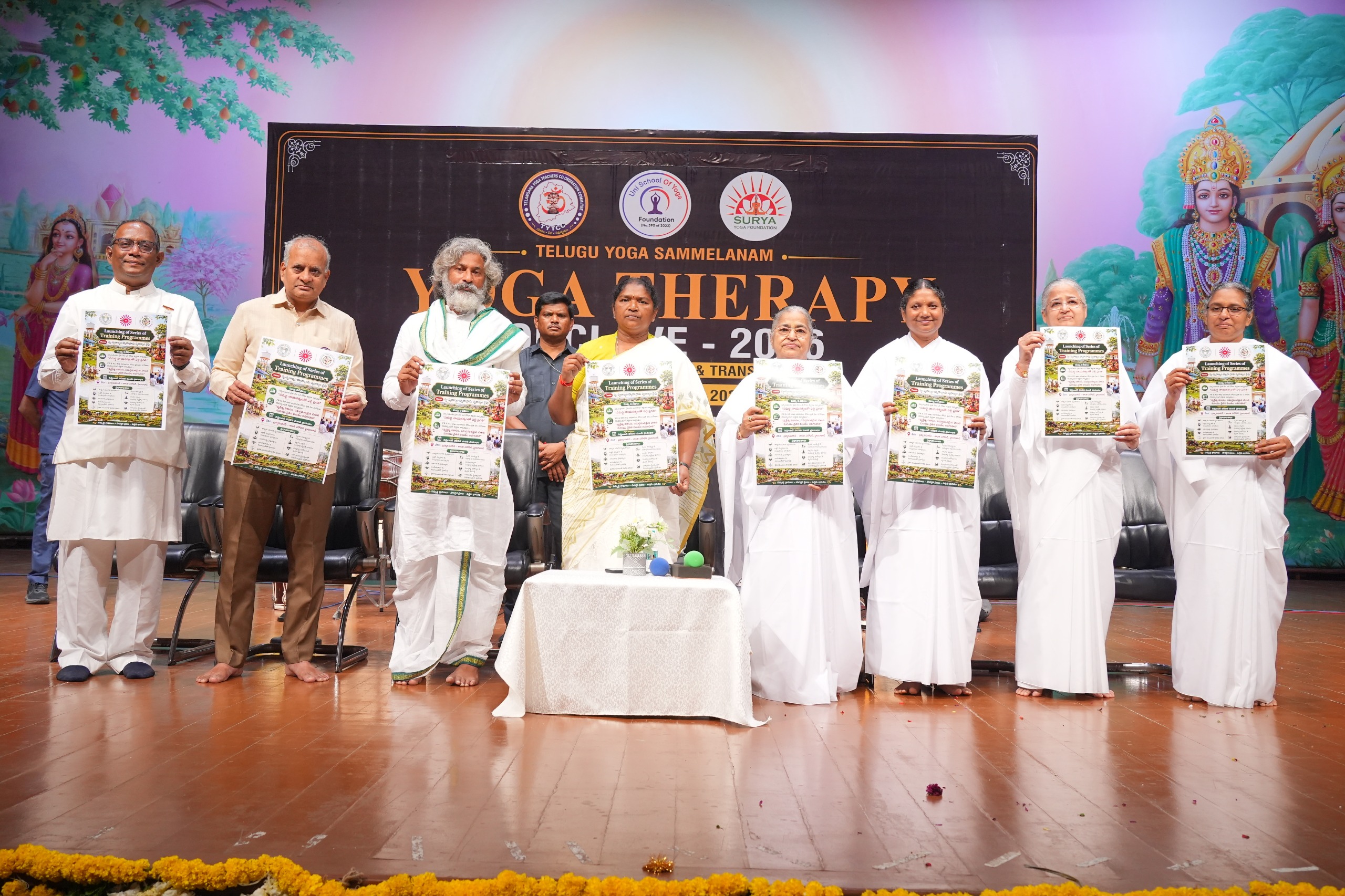
Smt. Seethakka, Hon’ble Minister for Panchayat Raj and Rural Development, Government of Telangana, formally launched the poster announcing the training programme series. The poster was unveiled at the Global Peace Auditorium at Brahma Kumaris – Shanti Sarovar in Hyderabad, marking the beginning of an initiative that seeks to connect effective administration with personal development, ethical values and sustainable rural progress.
The programme is being organised by the Government of Telangana in collaboration with the internationally recognised Brahma Kumaris organisation. Experienced faculty members from the organisation will conduct the training sessions, bringing together themes related to governance, leadership, personal well-being, agriculture, stress management and social development.
“Rural Governance Training”
Focus on Gram Swarajyam Through Good Governance
The central idea behind the initiative is to strengthen the concept of Gram Swarajyam, or empowered and self-reliant village governance, through better administration and responsible public service. The theme “Towards Gram Swarajyam through Su-shasan” places good governance at the heart of rural transformation, recognising that the development of villages depends not only on infrastructure and government schemes but also on the quality of leadership and administration at the grassroots level.
For rural development to become sustainable, elected representatives and government officials need to work together with a clear understanding of local needs and challenges. The proposed training seeks to create greater awareness about responsible leadership, ethical decision-making and the importance of maintaining integrity while serving communities.
“Rural Governance Training”
Sarpanches to Receive One-Day Training
Under the programme, Sarpanches across Telangana will participate in one-day training sessions. As elected representatives at the village level, Sarpanches have an important role in identifying local priorities, implementing development initiatives and connecting rural communities with government programmes and services.
The training is expected to provide them with an opportunity to reflect on leadership, public service, personal well-being and the wider responsibilities associated with village governance. By bringing these themes together, the initiative seeks to encourage a more holistic approach to Panchayat Raj administration.
“Rural Governance Training”
Three-Day Programme for Officers and Staff
Officers and staff of the Panchayat Raj and Rural Development Department will undergo three-day training programmes. The longer format is intended to provide government personnel with greater exposure to the various dimensions of rural administration and development.
The sessions will go beyond conventional administrative training by incorporating subjects related to leadership, stress management, ethical governance, self-development and holistic health. The approach reflects an understanding that effective public administration depends not only on professional competence but also on emotional balance, integrity, communication and the ability to manage challenging situations.
Training to Cover Sustainable Rural Development
One of the important areas of the programme will be well-being and sustainable development. Rural development is increasingly linked with the ability of communities to balance economic progress, environmental sustainability and social well-being.
The training is therefore expected to encourage participants to look at village development from a broader perspective. Rather than focusing exclusively on physical infrastructure, the programme seeks to promote an approach in which the well-being of villagers, sustainable agricultural practices, responsible leadership and community participation are considered equally important.
Shashwat Yogic Kheti Among Key Themes
Agriculture will also receive attention through sessions on Shashwat Yogic Kheti. Farming remains central to the rural economy of Telangana, and issues related to farmers’ welfare and sustainable agricultural practices are closely connected with the broader objective of rural development.
The inclusion of Shashwat Yogic Kheti in the training programme reflects an effort to introduce participants to approaches that combine agriculture with values, sustainability and well-being. The subject is expected to be particularly relevant for Sarpanches and rural officials who regularly engage with farming communities and village-level development activities.
Stress Management and Conflict Resolution
Managing stress and resolving conflicts are also among the subjects included in the training programme. Public representatives and government officials often work in demanding environments where they have to respond to competing expectations, administrative challenges and community concerns.
Training in stress management can help participants understand the importance of maintaining emotional balance while handling responsibilities. Similarly, conflict-resolution skills can contribute to better communication and more constructive engagement with communities, particularly when different groups have competing interests or concerns.
Leadership Excellence at the Grassroots
Leadership excellence will form another important component of the training. Effective rural governance requires leaders who can understand local issues, communicate clearly and inspire communities to participate in development initiatives.
The programme aims to encourage Sarpanches and officials to view leadership not simply as an administrative responsibility but as an opportunity to create positive change. Strong grassroots leadership can help villages make better use of available resources and government programmes while encouraging greater participation among residents.
Integrity and Ethics in Public Service
The training will also focus on dedication, integrity and ethical governance in public service. These values are particularly significant at the grassroots level, where elected representatives and officials directly interact with citizens and deal with issues affecting everyday life.
By emphasising ethical conduct and integrity, the programme seeks to reinforce the idea that good governance must be based on transparency, responsibility and commitment to public welfare. The initiative connects these principles with the larger vision of Su-shasan, or good governance, at the village level.
Meditation and Self-Development Sessions
Personal development and meditation techniques will also form part of the training. The inclusion of meditation reflects the programme’s broader focus on the individual behind the public role.
Officials and elected representatives often have to deal with pressure, deadlines, public expectations and difficult decisions. Sessions focused on self-development and meditation are intended to provide participants with tools that may help them develop greater self-awareness, concentration and emotional balance while carrying out their responsibilities.
Holistic Health and Drug De-Addiction
The training programme will also address holistic health, including awareness related to drug de-addiction. Health is an important component of sustainable community development, and the inclusion of this subject broadens the scope of the programme beyond administration and governance.
Drug addiction can have serious consequences for individuals, families and communities. By including drug de-addiction and holistic health in the training curriculum, the initiative aims to encourage participants to view rural development through a wider social and human lens.
Seethakka Highlights Importance of Rural Development
Speaking at the occasion, Smt. Seethakka highlighted the importance of rural development for the overall progress of society. She emphasised the role that villages play in the broader development of the state and expressed confidence that strengthening grassroots institutions and their representatives would contribute significantly to Telangana’s progress.
She also referred to her personal experience of witnessing positive transformation among individuals and impactful service activities undertaken by the Brahma Kumaris. She particularly acknowledged their work in areas connected with agriculture and farmers’ welfare, expressing confidence that the proposed training programme would prove beneficial for Sarpanches and government personnel.
Brahma Kumaris Emphasise Values in Daily Life
Rajyogini BK Kuldeep, Director of Brahma Kumaris, Hyderabad, spoke about the importance of incorporating positive values into everyday life. She stated that villages could once again become like Gokul when values become an integral part of daily living.
Her remarks underlined the philosophical dimension of the initiative, which seeks to connect governance and development with personal values and community well-being. The idea is that better villages can emerge not only through government programmes and infrastructure but also through responsible citizens, committed leaders and value-based public service.
Collaboration Aims to Strengthen Rural Governance
The partnership between the Telangana Government and Brahma Kumaris brings together governmental responsibility and a value-based training approach. While the Panchayat Raj and Rural Development Department is responsible for strengthening local governance and implementing rural development programmes, the training partnership is intended to provide participants with additional perspectives on leadership, personal well-being and ethical public service.
The initiative therefore represents a broader approach to Rural Governance in Telangana, where administrative effectiveness is viewed alongside human values and personal development.
A Step Towards Stronger Villages
The launch of the training programme series marks an effort to strengthen the capacity of grassroots representatives and officials at a time when rural development requires increasingly coordinated and responsive governance. Sarpanches and government personnel are among the key stakeholders responsible for translating policies and development programmes into outcomes at the village level.
Through its focus on leadership, sustainable development, agriculture, health, ethics, stress management and meditation, the programme seeks to create a more comprehensive understanding of what effective rural governance can mean in practice.
Building the Vision of Gram Swarajyam
The larger vision behind the initiative is to move towards Gram Swarajyam through Su-shasan, where villages are supported by responsible leadership, effective administration, community participation and sustainable development practices. The training programme is expected to provide Sarpanches and officials with an opportunity to learn, reflect and develop skills that can contribute to this vision.
With the participation of experienced Brahma Kumaris faculty and the support of the Telangana Government, the programme seeks to make rural governance more people-oriented and value-driven. If implemented effectively, such capacity-building initiatives could become an important component of the state’s continuing efforts to strengthen Panchayat Raj institutions and promote sustainable rural development.
Dignitaries Attend the Launch
The poster launch was attended by Rajyogini BK Kuldeep, Director of Brahma Kumaris, Hyderabad, along with BK Anjali, BK Arundati, BK Vamsidhar and others. Their participation reflected the collaborative nature of the initiative and the importance being given to the training programme series.
The initiative now sets the stage for a series of training sessions that will bring together elected village representatives, government officials and experienced faculty to explore new dimensions of leadership and rural development. The ultimate objective remains clear: to strengthen villages through better governance, responsible leadership, sustainable development and a stronger commitment to public service.